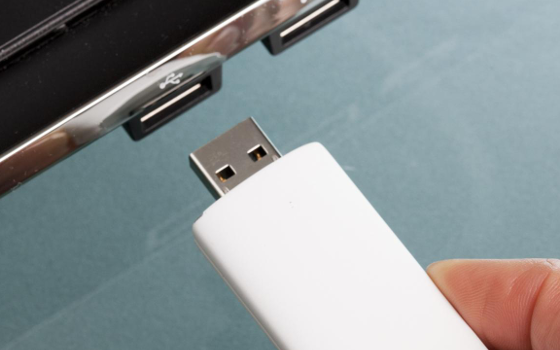
HIV Test Performed on USB Stick
- Details
- Category: Development
Scientists have developed a type of HIV test on a USB stick. The device, created by scientists at Imperial College London and DNA Electronics, uses a drop of blood to detect HIV, and then creates an electrical signal that can be read by a computer, laptop or handheld device.
Crack the Human Brain
- Details
- Category: Development
The time is ripe, the communication technology is available, for teams from different labs and different countries to join efforts and apply new forms of grassroots collaborative research in brain science. This is the right way to gradually upscale the study of the brain so as to usher it into the era of Big Science, claim neuroscientists in Portugal, Switzerland and the United Kingdom. And they are already putting ideas into action.
SleepCoacher: A Personalized Automated Self-Experimentation System for Sleep Recommendations
- Details
- Category: Development
There are plenty of cellphone apps on the market designed to help people monitor their sleep patterns. The apps generally record data on when people go to bed and when they wake, and many use the device's microphone and accelerometer to take note of noises in the night and to monitor how much people toss and turn.

Pediatricians Update Digital Media Recommendations for Kids
- Details
- Category: Development
It's not so bad to hand your child an iPad once in a while depending on how it's used.
Playing a game together or Skyping with Grandma? That's OK.
Helping your little one calm down or trying to keep peace in the house? Not so much.
A Portable Smartphone Laboratory Detects Cancer
- Details
- Category: Development
Washington State University researchers have developed a low-cost, portable laboratory on a smartphone that can analyze several samples at once to catch a cancer biomarker, producing lab quality results. The research team, led by Lei Li, assistant professor in the School of Mechanical and Materials Engineering, recently published the work in the journal Biosensors and Bioelectronics.
Specific Grant Agreement One Signed by the European Commission and the Human Brain Project
- Details
- Category: Development
The European Commission and the Human Brain Project (HBP) Coordinator, the École Polytechnique Fédérale de Lausanne (EPFL), have signed the first Specific Grant Agreement (SGA1), releasing EUR 89 million in funding retroactively from 1st April 2016 until the end of March 2018. The signature of SGA1 means that the HBP and the European Commision have agreed on the HBP Work Plan for these two years.
A Mobile Device Developed by VTT Detects Irregular Heartbeats and Helps to Prevent Cerebral Infarctions
- Details
- Category: Development
VTT Technical Research Centre of Finland has developed a mobile app and thumb-size device that help to prevent cerebral infarctions at an early stage, during asymptomatic atrial fibrillation. The mobile device, which detects arrhythmia (irregular heartbeat) has been tested with excellent results for around two years in real-life conditions in cooperation with Turku University Central Hospital.
More Digital Health News ...
- CHIC Project Survey: Your Opinion Counts
- Penn Software Helps to Identify Course of Cancer Metastasis, Tumor 'Evolution'
- Big Data Europe Addresses Societal Challenges with Data Technologies
- Rafi-tone App Set to Help Millions of Children with Asthma
- Super-resolution Microscope Builds 3D Images by Mapping Negative Space
- Do Pokémon Go and augmented reality games offer real health benefits?
- Scientists Develop Painless and Inexpensive Microneedle System to Monitor Drugs
Page 14 of 46